
Ace Biorefining
The most impactful innovations address urgent societal and market needs. Ace Biorefining BV does just that. It industrialises the sweet spot in biorefining. Using reliable and scalable (bio)technology, Ace offers a process that can convert biomass into high-value materials and chemicals, affordably and at scale, in Europe.

Meeting the moment
Europe is facing several interconnected challenges. The chemical industry is rapidly leaving the continent due to energy costs, foreign competition and regulatory pressure. At the same time, Europe imports the vast majority of its oil, and geopolitical instability is rendering that dependency untenable. The timeline to meet climate obligations is growing shorter, and the slow transition to more sustainable options is reaching a breaking point.
Europe needs new industrial infrastructure that enables sovereignty, utilises resources close to home, and addresses these challenges. Biomass is one such resource. It is available in abundance across the continent in the form of agricultural residues, forestry waste, roadside cuttings and food processing by-products. Converting biomass into high-value materials and chemicals is not a new idea. But doing so affordably, flexibly and at scale has been a challenge. Until now.
Biorefinery meets biotech
Ace Biorefining is a TNO spin-off that is bringing proprietary Fabiola biorefining technology to commercial scale for the first time. Fabiola separates lignocellulosic biomass – wood chips, wheat straw, grass, agricultural and food processing residues – into three high-value fractions: high-purity lignin, cellulose-enriched pulp and hemicellulose sugars. The process is feedstock-flexible, which means it can handle a wide variety of biomass streams without retooling. That flexibility makes Fabiola technology commercially viable across Europe’s fragmented and regionally variable biomass supply.
Beyond the Fabiola foundation, Ace also integrates ABE fermentation. The (hemi-)cellulose sugars produced during fractionation are routed directly into the fermentation process, yielding high-quality butanol, ethanol and acetone. These established drop-in biochemicals are in high demand. They can directly substitute for their fossil counterparts in existing industrial processes with no adaptation, thereby removing one of the biggest barriers to bio-based chemical market entry.
Ace’s integration of the fermentation process also improves process economics. The Fabiola fractionation process uses water and acetone as solvent. The sugar fermentation produces acetone, delivering integration options that reduce energy consumption and operating costs. Biorefinery meets biotech – and the result is a leaner, more profitable plant.
Multiple revenue streams, multiple markets
Ace’s biorefining model is designed to generate value across several output streams simultaneously. The high-quality lignin and its competitive pricing sets Fabiola apart from competing technologies. It is the foundation for, among others, specialty adhesives and high-performance composite materials. The butanol and ethanol streams serve the chemical industry and have direct application in sustainable aviation fuel: a market with growing relevance under European policy pressure. High-quality acetone has applications in both the chemical and cosmetics industries, where bio-based sourcing is increasingly in demand.
Together, these output streams give Ace a diversified revenue model, and a route to commercial viability that does not depend on any single market or application. The refinery model addresses industrial, logistical and sustainability needs across multiple sectors. It can also help secure Europe’s position in growing industrial markets. It offers a path toward sovereignty, reduced foreign dependence and the achievement of sustainability targets.
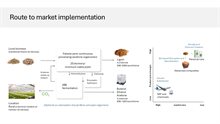
The route to market
Ace is currently advancing toward pilot-scale validation in existing European facilities, avoiding the cost and lead time of building dedicated infrastructure. From there, the path leads to a commercially viable Minimum Viable Plant, projected to be fully operational in 2032.
Ace Biorefining is actively engaging feedstock suppliers, engineering partners and industrial offtake partners to ensure a robust value chain. The company welcomes discussions with investors and development partners interested in scaling up bio-based chemical production in Europe, and contributing to new value streams that help to secure Europe’s position in future industries.
The technologies are ready. Their integration is underway. Market conditions are aligning. Ace is now seeking the partners to make it happen.
Could Ace Biorefining technology benefit your market position? Contact us for investment opportunities.
Contact us
-

Kelly Ackermans
Functie:Venture ManagerSpecialisatie niet bekendAs Venture Manager at TNO, Kelly Ackermans is responsible for building spin-off companies based on TNO’s deep-tech innovations. She manages a growing portfolio of start-ups and scale-ups, helping them bring breakthrough technologies to market and maintaining strong relationships with investors and key stakeholders.
TNO Ventures currently manages a portfolio of more than 45 companies that together have raised over €500 million in external capital. Kelly plays a key role in shaping this portfolio and supporting ventures through their early growth phases.
She chose this field out of a strong belief that technology should not remain in the lab, but be applied at scale to solve real-world challenges and drive meaningful societal change. With a background in chemistry and a track record in competitive sports, she brings perseverance, purpose, and a clear ambition to turn technology into companies that matter.
-
E-mail:E-mail Kelly
-
LinkedIn:Kelly on LinkedIn
-